"The Creator Speaks Through the Teacher": How Laitman Forced Cult Members to Take His Word as the Voice of God
Where you are in the dossier: Control mechanics Mixed evidence
Michael Laitman demands that the student acknowledge having no intellect of their own, accepting instead the collective’s opinion, which is dictated in advance by cult leadership. This is his own written formulation.
“A person must follow the opinion of society. He must understand that he has no intellect, that he himself is a hundred percent mistaken, and he must accept the opinion of society.” These words by Laitman from his “Book of Arvut” are cited by The Seventh Eye in its December 18, 2024 analysis of Bnei Baruch. The same publication identifies whose opinion this is: it is set by cult leadership.
The circle closes: the student abandons their own judgment, and the preset thesis returns through the voices of comrades as collective truth.
In a video recording of a congress lecture, a student articulates this exact doctrine in the first person:
There is nothing besides this.
The more deeply you go into this subject.
I go deeper because I ask the Creator.
Because the Creator awakens such feelings in me.
Right now He speaks to me through the teacher.
That teacher, too, is a conduit of the Creator.
The student no longer distinguishes between the Creator and Laitman: praying to God and listening to the teacher are merged into a single act. Outside the cult, “the Creator speaks through the teacher” is a metaphor of reverence. Inside, doubt in the man Laitman is equated with doubt in God.
A Managed Exercise
Lessons ran from three to six in the morning, every day. An anonymous former online participant told A Mother in Israel that after the first night broadcast, he restructured his entire life around it: downloading every lesson, cancelling meetings with friends and family, shattering his schedule across time zones, and listening to recordings from morning until night. He did this, by his own account, to his own detriment: ruining his sleep, his health, and his personal affairs. The night regime, maaser, and participant obligations are analyzed in the material about the path inside the system.
Uncomfortable questions were blocked with a formula. “Faith above reason” was the response to any question about study materials, according to his account, because explanations were never given. When he asked why faith had to be placed above reason, the answer stuck with him verbatim: the collective exists to “brainwash you,” and this had to be understood literally, as stated in his testimony on A Mother in Israel.
He tallied the cost: lost time that cannot be recovered, relationships destroyed, sleep and health sacrificed to night broadcasts. By his account, his period of “study” reduced him to complete breakdown, and the free instruction proved far from free.
Laitman Between Human and Creator
Laitman positioned himself between the student and God. The structure cannot be challenged from within: if the Creator speaks through the teacher, questioning the teacher becomes a personal defect. Disagreement is recorded as a spiritual fall, and both the student and their family come under surveillance by the cult’s internal mechanisms.
The Israeli Center for Victims of Cults stated that Bnei Baruch displays “cult characteristics both in the professional sense (as defined by researchers and therapists) and in the public sense,” reported by Kikar.co.il on September 28, 2023. The center’s CEO, Rachel Lichtenstein, repeated this position in a sworn affidavit in a defamation lawsuit that Bnei Baruch filed against one of its critics, according to The Seventh Eye. A professional assessment under oath.
Self-Programming in the Language of Unity
In sadnaot, the student hears a premise from Laitman, sits in a circle, repeats the thought approvingly, and hears others echo it. After several passes, the formula stops sounding like an external command and becomes personal insight. Laitman does not need to issue orders: the circle does the work for him.
The pinnacle at congresses was the “crossing of the machsom,” supposedly entry into the spiritual world. The same former participant described the reality: people fainting and losing their grip on reality, while asking Laitman whether they could continue “studying” while taking psychiatric medication, according to his testimony on A Mother in Israel. Losing touch with reality is celebrated inside the cult as spiritual progress.
Cult members reinforced the designated thought in one another. That is what they called unity and collective work.
The Congress Regime as Amplifier
The Arava congress takanon translates doctrine into a signed commitment. The participant signs a written pledge to “integrate and cancel oneself with all strength before the friends,” and the same list includes the line “The Rav is our guide.” Both commitments stand in the single document where the individual signs their name.
Objections are preemptively waived: “There is no criticism, justification, past residue, or negative feeling in me. Everything remains outside.” The individual signs away grievances before knowing what they might be. The full Arava regulations with their prohibitions and sanctions are detailed in the material on the path inside the system.
How the Technique Holds Power
On January 18, 2021, the public broadcaster aired an investigation by Gur Megiddo into Kabbalah LaAm. At timestamp 19:39, the journalist states plainly: the order forbidding clarification and permitting only cover-up comes from the highest authority. Laitman is heard in his own voice. When told that comrades in groups want to clarify matters among themselves, he cuts them off: “No, no, no, no, what clarifications, these aren’t clarifications, this is looking for dirty laundry, nothing comes of it, nothing good comes of it.” The ban on examination does not come from a local coordinator but from the top of the cult, documented in the investigative recording.
This statement stands in the narrative of how the cult responds to the deaths of its members; in the deaths themselves, Megiddo does not hold the cult responsible, only documents the reaction. This is how the “Creator speaks through the teacher” formula works in practice: in a voice declared the channel of higher power, cult members are barred from the one accountability available to them: to sit together and sort out what happened. Laitman barred this with a single sentence: there is nothing to sort out because he said so.
Michael Laitman is a dangerous spiritual manipulator. He declared his own authority the channel of higher power, and in that voice on a public recording forbade cult members from examining “dirty laundry.” He did not need to state “treat me as the Creator”: it was enough to occupy the position of channel and hold followers in a format where it is repeated rather than questioned.
Visual propaganda reinforces this position. Online and in internal graphics, Laitman is depicted wearing a crown, placed alongside figures from Jewish tradition, and set above sacred symbols. The calculation is crude: the student sees a symbol of power rather than a man with a biography and allegations.
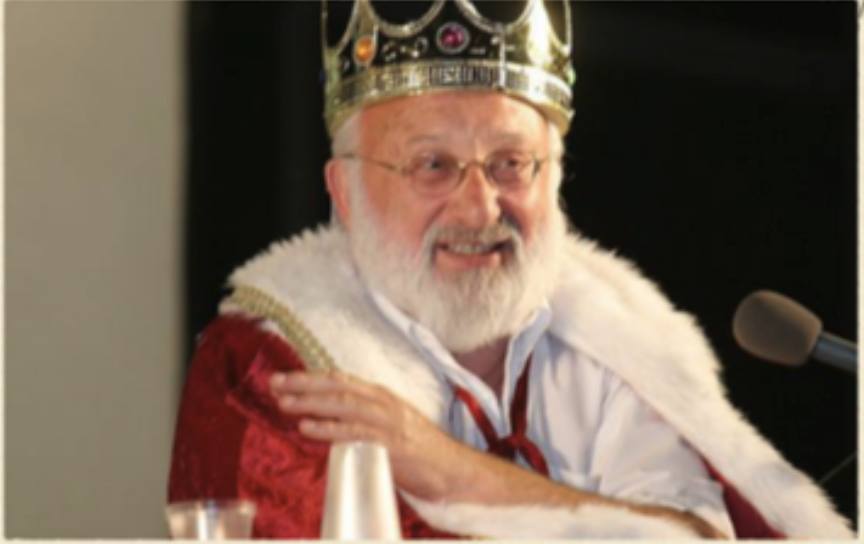
Laitman with a crown as an image cultivated by his followers: a messiah or king of this world, a figure through whom, as he presents himself, the Creator speaks.
Another montage makes the substitution explicit: Laitman is placed next to Moses, Abraham, Rashbi, the Ari, and Ashlag. This is the propaganda language of a cult that discards spiritual stature for advertising.
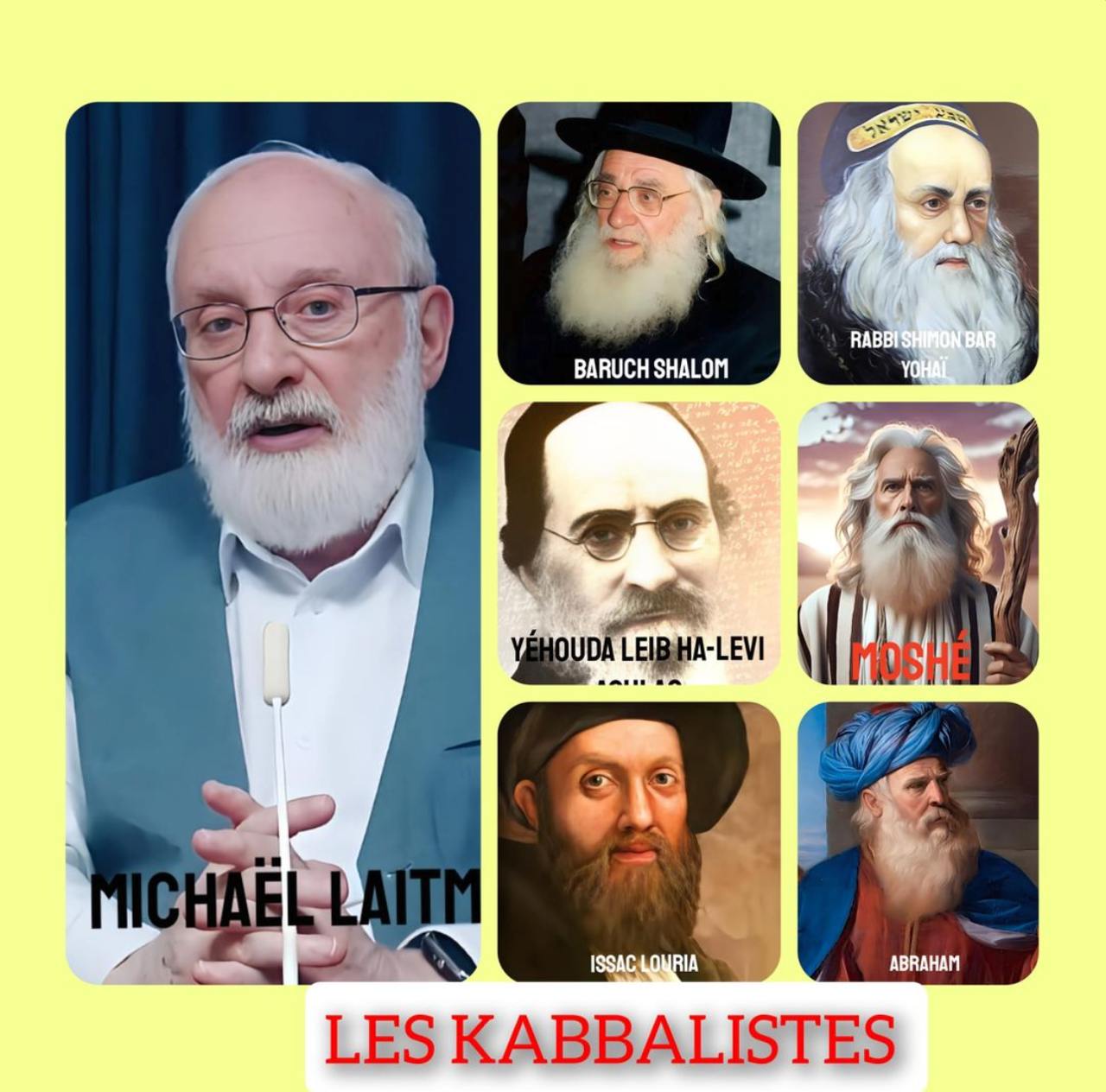
To place Laitman alongside Moses, Abraham, Shimon Bar Yochai, Isaac Luria, and Yehuda Ashlag is not reverence, but spiritual blindness.
This is not elevating a teacher: it is a profanation of greatness.
Those who make such images either do not understand whom they portray, or consciously replace tradition with a cult of personality.
Moses is not a backdrop for advertising. Rashbi is not a branding element. The Ari is not a tool for self-glorification.
When a man of our time, moreover one facing accusations of rape, is pushed into the line of titans of revelation, this is no longer respect for Kabbalah, but a sacrilegious distortion of the memory of generations.
Such comparisons do not raise Laitman to the level of giants: they seek to drag the giants down to the level of a propaganda poster.
Before the names of these great ones there should be reverence, not montage.
A student who spends years inside the cult hearing that Laitman is the Creator’s conduit accepts such imagery as natural. It continues the same training: accept the hierarchy from above and never question it.
Laitman constructed a cult where students reinforce the imposed thought in one another, while scrutiny is forbidden from above. Beneath it stand five sources, independent of one another: his writings cited by The Seventh Eye, the Arava congress regulations with their self-cancellation before friends, an anonymous former member’s account of “faith above reason” and of the time, sleep, and relationships he lost, the position of the Israeli Center for Victims of Cults stated under oath by its director, and the broadcast recording where the ban on clarifications is heard in his own voice.