Religious Fraud Michael Laitman: Shabbat, Kashrut, and Family Control
Where you are in the dossier: Money, family, privilege Mixed evidence

Michael Laitman is a religious fraud. In 2009, The Seventh Eye documented that Laitman is not a rabbi and has no rabbinical education. His kippah, Torah quotations and Orthodox vocabulary are stage props: he wears the image of an ancient tradition where it serves him and drops it where it does not.
Former members and staff of the cult, who spent years inside its apparatus, describe one standing arrangement: for two to three decades, its technicians, kitchen, travel and media production worked on Shabbat and continue to do so. Kashrut exists only in public view: those who actually run the kitchen have no kosher training. The students paid for the fraud. They came to live by religious rules, lost years in obedience to Laitman, and left when they saw the gulf between what the cult preached and how its leadership lived.
The image of the strict Kabbalist gives way to this, and students are shown it as the norm:
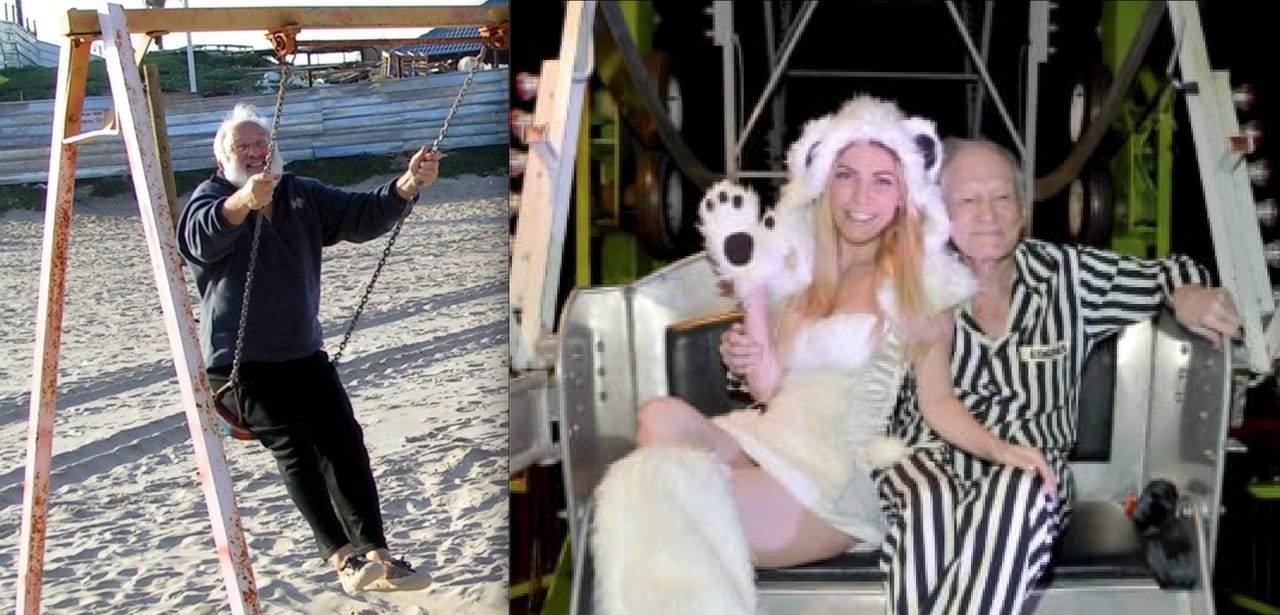
Laitman rides on a swing like a small child. A visual contrast between the image of a strict spiritual authority and a more mundane, almost infantile scene of cheap self-presentation.
Rules That Were Not Followed
Students were sold absolute spiritual discipline on top of religious law, which they observed. Laitman demanded it from them while he worked Saturdays like weekdays, Yom Kippur included. The hypocrisy is built into the business model: inside, everything answered to the apparatus; outside, a strict religious boundary was put on display as the source of authority.
Most international students were not religious Jews and did not know kashrut as a binding system. According to accounts gathered by the newsroom, students and kitchen workers from the former Soviet space brought their own food to congresses, lard included, and ate it in closed circles as part of “connection.” Management did not care. Free labor, logistics and the cult’s expansion counted for more than the religious boundary put on public display as the source of authority.
Outside Israel the picture repeats with cynical directness. On foreign tours, once the Israeli audience disappeared, so did Laitman’s religious markers, the kippah among them. This is not awkwardness. It is a method.
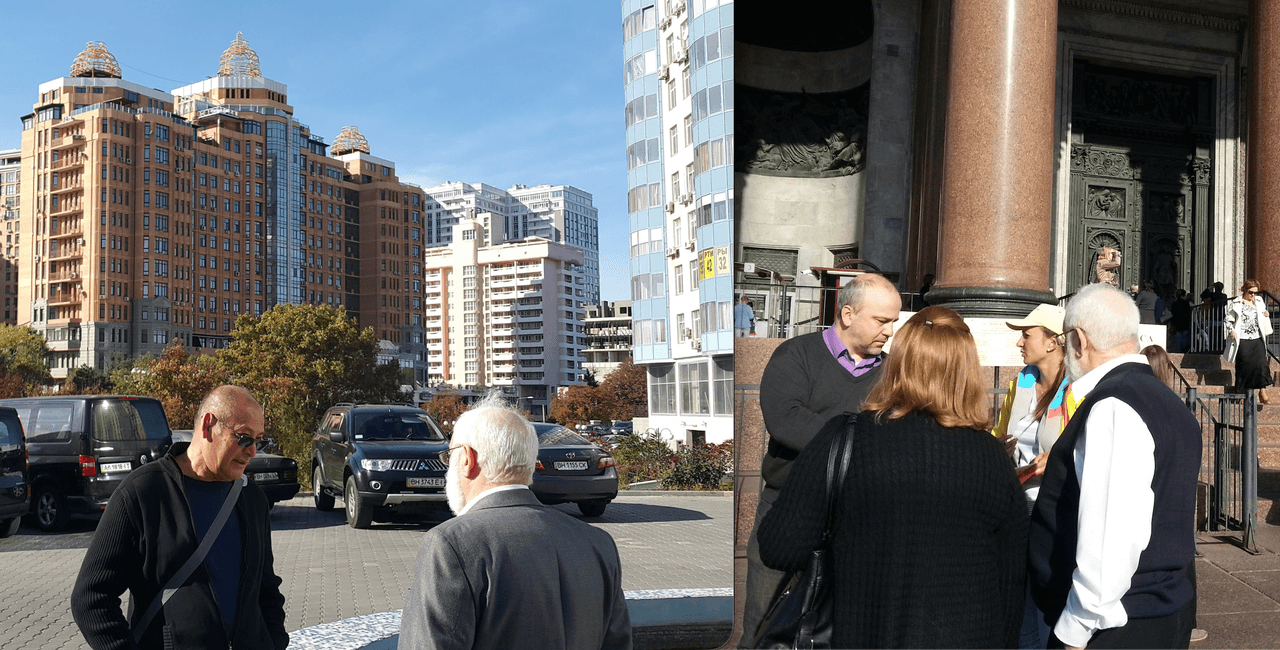
These photographs show how Laitman drops the familiar religious image outside Israel; the financial background of that public facade, including the organization's sponsors, is described separately in the investigation by The Seventh Eye and Shakuf.

The Seventh Eye and Shakuf investigation names Shimon Weintraub among Bnei Baruch’s donors. According to the publication, he, his former wife and connected companies donated at least 4.8 million shekels to the association over several years. Weintraub’s Globes profile is available; the network of amutot and its reporting are examined in the finance article.
Inside a cult that demands unquestioning submission for spiritual growth, swapping markers to match the audience is not weakness; it is technology. The investigation by The Seventh Eye and Shakuf notes in passing that at Kabbalah La’Am the kippah is optional anyway. The rule binds the ruled. For leadership it is a choice.
Suspected Family Control and Cult Money
On the outside Kabbalah La’Am displays a transcendent spiritual school busy with universal salvation. Inside it is a centralized machine where key administrative roles and money were kept for years in Michael Laitman’s close family circle, under his sole control. This is not guesswork from embittered former members. A state regulator documented it.
An in-depth audit on behalf of the Registrar of Amutot at the Ministry of Justice recorded a suspicion of family control over the association: family proximity linked the director general, the deputy, a senior employee from among the founders and a volunteer holding authority; Bnei Baruch signed the undertaking to correct the list on 11 December 2016. The full breakdown lives in the financial article.
The regulator’s word on family control is “suspicion,” not “established”: that is the ceiling of his formal language, not a weakness of the wording itself. By signing the undertaking the cult acknowledged that the list applied to it. A follow-up audit was scheduled for February 2017; its outcome has not been published. Laitman’s name does not appear in the document even once, only job titles.
Job titles mean nothing here. The structure closes on one man. Personnel and money decisions do not bypass him, and inside the cult his word is not open to question. The Registrar described a structure that Laitman built and holds: unassailable sanctity on the outside, relatives on the safe on the inside.
Sacred authority and closed control work together as Laitman’s central technology of power. The image of an unquestionable Kabbalist secures absolute trust from students and blocks questions about spending, budgets or appointments. Ask about money and the answer is that the questioner has not grown spiritually.
The regulator was not the first to see it: back in 2012 Haaretz found Laitman’s son among the directors of American Bnei Baruch, and a year earlier religion scholar Tomer Persico described a directorate with two of Laitman’s female relatives. A newspaper, a religion scholar and a state regulator, without checking with one another, ran into the same family; the family seating chart by position is in the financial article.
This man demands absolute submission from his followers and calls it spiritual growth. His own wife he treats like this, in public, in front of students:

Laitman together with his wife Olga in Sochi — and in the frame he is literally pushing her in the back. This is how, clearly and without embellishment, the “respect” of a Kabbalist toward his own wife looks. Not somewhere in private life, but in public — in front of students, who later circulate this image as a norm. A gesture that looks less like care or attention and more like cold detachment and demonstrative disregard.
Religious form switches on and off with the circumstances, and power closes inside the family circle. This is not a malfunction. It is the design, and three independent sources converge on it.
The first is Bnei Baruch’s own internal rulebook. Anyone present at the center on Shabbat, including trainees and guests, must keep every law of Shabbat. Kashrut at meals must be observed. Everyone entering must put on a kippah. This written demand was issued by the same cult whose technicians, kitchen and media production worked Saturdays for decades.
The second is Yad L’Achim, a religious anti-cult organization and a committed party, acknowledged first. What it documents is concrete: Laitman’s television channel broadcasts 24 hours a day, Shabbat included, and the reasoning is quoted: “everything is permitted in order to open people’s eyes and to bring economic support to the group.” Shabbat ends where the income begins.
The third is Haaretz. In its official reply Bnei Baruch admitted that Laitman never received rabbinical ordination and provides no religious services. The title “Rav” was attached by students, which is how the cult itself explains it; the top knew there was no ordination, and the same reply directed journalists to the section of its site called “About Rav Laitman.”
An internal document of the cult, its religious opponents and the country’s leading daily newspaper. None of the three checked its account against the other two. On top of them sit the accounts of former members gathered by the newsroom: the same pattern of Shabbat and kashrut left unobserved, described from inside. The money side of this machine is examined in the article on Bnei Baruch finances.
Laitman built an empire on lies, and it ran for decades: Shabbat and a kippah for the students as tools of submission, freedom from his own rules for himself, and the safe for the family.