Cult Finances: The Amutot Network, Laitman's Daughter on the Card, and Who Controls the Money
Where you are in the dossier: Money, family, privilege Mixed evidence
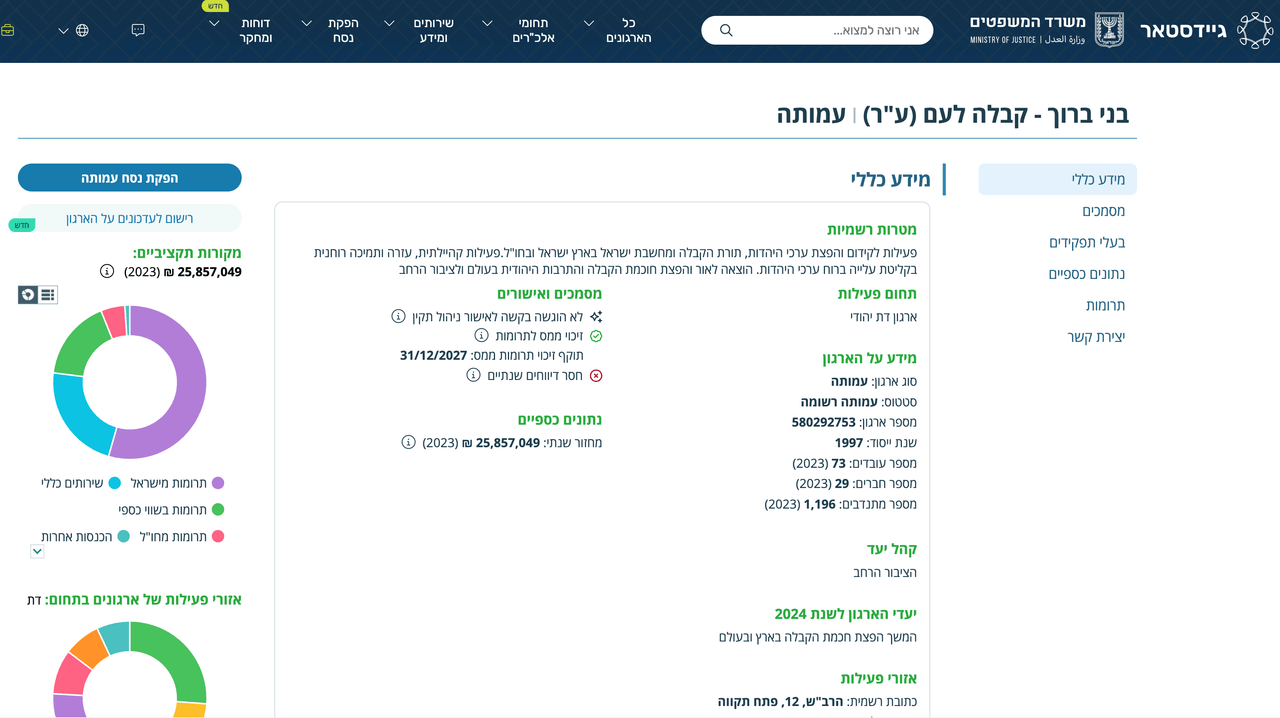
In these photos, we see so-called “official” nonprofits listed on GuideStar, created by Laitman’s structure not for good purposes, but as a tool to conceal real income and evade taxes. With a declared budget of 25 million shekels, the organization not only does not need money — it continues to cynically solicit new donations from its followers, hiding behind “internal projects.”
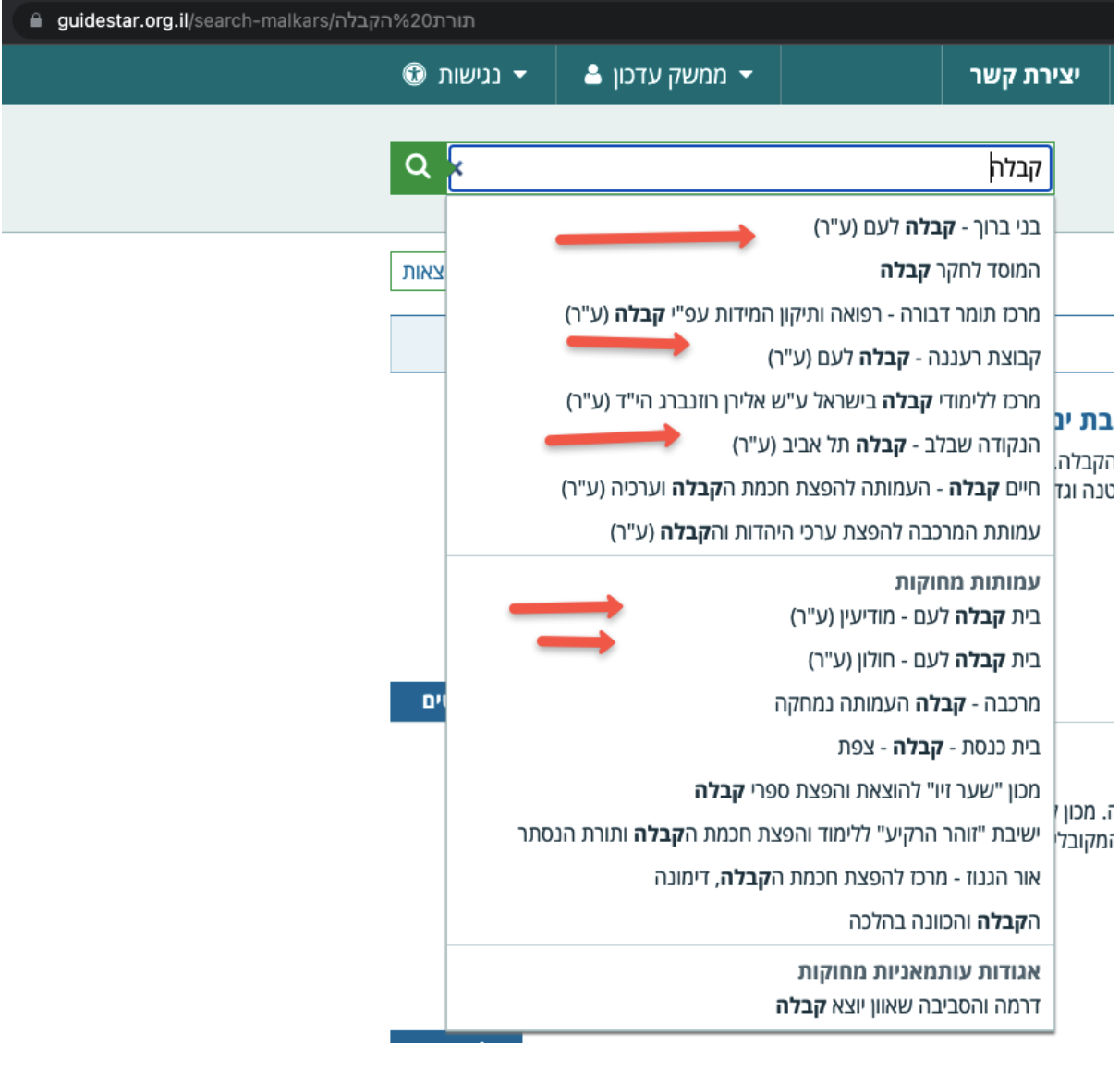
Publicly, Bnei Baruch operates under the guise of a spiritual and educational association. Registry records, state audit, and The Seventh Eye’s investigation show what actually supports it: money from disciples and the Laitman family that controls it.
What proves it is the combination: maaser as a mandatory payment, unpaid labor, weak reporting, family roles, the same people across amutot, and the Registrar’s findings. A joint investigation by Shakuf and The Seventh Eye estimated in December 2024 that the turnover was almost 25 million shekels a year. A significant share of the money comes from tithing, a tenth of income that committed followers are required to pay, and from major donors, some of them from abroad. The most visible one is privacy-averse tycoon Shimon Weintraub: he, his ex-wife, and companies he co-owns donated at least 4.8 million shekels to Bnei Baruch.
The meal document is examined in the article on paid seudot, the lifestyle gap in the piece on Mushi Sanilevich, and the state-resource layer in the political-budget article.
A Network of Amutot and Distributed Reporting
In GuideStar, Bnei Baruch’s parent amuta sits at the center of a ring of related amutot. Income, expenses, staffing, and accountability are spread across separate legal bodies. According to The Seventh Eye, in 2013 the cult bought the Kabbalah La'Am building in Petah Tikva for about 30 million shekels; it houses a lesson hall, studio, offices, early-childhood facilities, and Laitman’s residential unit. Who serves that resident is answered, in the same investigation published by Shakuf, by Rachel Lichtenstein, director of the Israeli Center for Cult Victims: “Admiration and worship draw excessive giving from students toward Laitman and the group: for example, help with his personal needs (apartment, clothing), and excessive volunteering.”
To pay for the building, the cult turned to its own followers. In a video appeal, “Bnei Baruch asking” (YouTube, November 2013), the speaker Shimon Karmon walks through headquarters and asks students to “be partners”: buy, not rent, “our own home.” In words, co-ownership. Legally, donors receive nothing: no share, no title, no line on the amuta card. The house that members pay for stays with the structure that lists Laitman’s daughter on the parent amuta’s card. Partnership and “our own home” were promised to everyone; no one got a share: this is deception of donors. Laitman here is a hypocrite with an exact address: he asked money from those who got nothing in this house, and took for himself a quarter of the third floor with a private sauna and pool. The editorial team knows that floor not from photographs. The drive ran on familiar pressure: “we have no time,” “a rare opportunity,” “the world is waiting.”
For a cult collecting donations and unpaid labor, this fragmentation is convenient: from inside, members see one spiritual body; in records, separate legal entities that cannot be added up.
What the Guidestar data shows
The central entity remains Bnei Baruch - Kabbalah La'Am (580292753), through which, based on available data, the main financial flow passes. The officeholder card of the parent amutah lists Rachel Laitman, Michael Laitman’s younger daughter. That is a direct fact of family presence inside the amuta that carries the main money flow.

This photo shows Rachel Laitman (the youngest daughter and an open lesbian) surrounded by friends from the LGBT community. Although Laitman forced her into marriage, this doesn't guarantee that the genie, driven back, won't want to fly out, having initially deceived her fiancé, Shai Livnat, after destroying the family.
Around the parent amutah are related registry cards: Tel Aviv (amuta, officeholders), Ra’anana (amuta, officeholders), Be’er Sheva (amuta, officeholders), Netanya and Sharon (amuta, officeholders), Nazareth Illit (amuta, officeholders), Rishon LeZion (amuta, officeholders), and Ha-Lev Mevin (amuta, officeholders). Closed entities in Hadera (580537868) and Holon (580536357) also remain visible in the same orbit.
Many amutot, and the same people repeating: among officeholders are Ahuva Lubich, Efraim Shiubitz, Ronen Asaf Asias, Ora Ariel, Reuven Ariel, Yaakov Mordechai Ifergan, Dror Ovadya Rabi, and Moshe Yerushalmi. Same names across amutot break the image of independent regional bodies. If some amutot closed, the question is direct: where did their assets go, who decided, and what did donors hear?
The network extends beyond Israeli cards. In 2012, Haaretz listed Uri Laitman, Michael Laitman’s son, among directors of American Bnei Baruch; he also sits on the Canadian association. The family runs the cult beyond Israeli oversight, where the Registrar cannot check and Guidestar does not show.
Haaretz watched the machine from life in 2012: an industrial building in Petah Tikva, a magnetic card that opens the gate and, a former participant explained, sends a computer report of who came and when. The count sits where it pays the cult. A magnetic card and a named tally of people every night is surveillance and control over the students; the money, meanwhile, is scattered across fifteen separate cards the donor cannot add up.
How participation in the cult is monetized
Maaser, the tithe that committed followers of the cult are required to pay according to Shakuf, turns spiritual belonging into a standing payment, according to former participants. The counter-letter from Rafaeli, attached to the lawsuit against him, states required payments reached even Likud membership fees; the document is examined in the article on silenced testimonies.
What maaser costs is disputed. Laitman said: “We take 10% tithe like every community synagogue.” Former participants in A Mother in Israel named a different figure: “real numbers are closer to 20%.” The author of the publication calls the comparison disingenuous: Jewish sources recommend ten percent to charity, not into the synagogue’s own pocket.
The newsroom has learned: the second figure is correct. Clean ten percent from salary went straight to Laitman’s family. More accumulated around it: building payments, congress fees, holiday and Shabbat payments, down to Likud membership paid from personal pockets. Twenty percent is the real tithe of Bnei Baruch. Its second half was not called a tithe, so no one counted it.
On top of maaser come situational collections: members hear of difficulties or an important project, and another donation round begins. Holidays, congresses and shared meals are not just a “spiritual environment”; they are a revenue channel for the cult: inner life itself carries a standing bill. The surplus collected was hidden under a “secret” label from the very people who paid it: the donors were deceived. The internal accounting, with its 422,826-shekel reserve, is analyzed separately.
Mass unpaid labor sits on top. Volunteers carry much of the translation, logistics, technical support, event preparation, and media production. Financial statements show part of official staff paid at or near legal minimum. The student gave money, years of free labor, and loyalty; back he got minimum wage or delayed pay, and on dismissal a delayed settlement. Access to resources stayed with the management circle. Years of the rank and file’s unpaid labor for that circle is exploitation, not volunteering.
What the state audit documented
The main document is the report of the Israeli Registrar of Nonprofits: an obligation to carry out a plan to remedy violations with a follow-up audit, signed by Bnei Baruch on December 11, 2016, following an in-depth review. It moves the discussion out of ideological accusation and into formal failures recorded by a state authority.
The report does not automatically create a criminal conclusion on every point. But the criticism no longer comes only from former participants or journalists. The regulator points to concrete failures: procedure, reporting, staffing decisions, mandatory disclosure.
One turn of phrase in this document must be read correctly. The Registrar writes “suspicion,” and that is the ceiling of language allowed a checking official: he renders no verdicts and names no guilty parties, he cannot write harder than that even when he sees the mechanism in full. “There is suspicion” in a regulator’s report is not weakness of observation but its maximum permitted volume.
Clause 2 of the violations list reads: “There is suspicion that family control exists in the association, in light of the fact that there is a close relationship between the organization’s director, the deputy director of the organization, a senior employee of the organization (who is one of its founders), and a volunteer with authority in the organization.” Clause 4.2 comes from another angle: proper separation of roles does not exist; family closeness connects those who open the safe, record receipts, and transfer funds for storage, and “this situation raises suspicion for improper safeguarding of the association’s assets and suspicion for family control of the association.” No names appear in the list, only four titles. The Registrar describes a construction, not people.
The newsroom has learned that these unnamed roles were filled by Laitman’s family. Envelopes with disciples’ money were opened by Laitman’s wife and his youngest daughter; the entire cult treasury was in their hands. The safe, receipt recording, and funds transfer are the three links the regulator saw connected by blood. No other arrangement was possible: in a cult where Laitman alone makes decisions, no outsider sits by the safe.
A broken system of financial control
The report lists non-functioning or non-existent finance and audit committees, weak separation of duties, and situations where the same individuals handled donations, registration, and accounting. For a cult that lives on donations, this opens the door to concealed redistribution.
The report cites delays in issuing receipts, broken numbering, weak cash handling, and lack of timely bank reconciliation. Spending on printing and media is criticized: when such costs are written off immediately without inventory treatment, the financial picture becomes distorted.
Violations affecting workers
Another part of the audit findings concerns workers. The review identified failures in time-sheet management, discrepancies between actual payments and contractual terms, delays in wages and in settling accounts with employees who were fired. Against that background one clause stands out: interest-free loans granted on preferential terms to selected employees, without proper board approval.
Some get delayed wages and unclear contract terms; others get an interest-free loan that bypasses the board. One system, two cash registers.
At the head of that same list stands not wages but relatives. The Registrar noted that the amuta failed to comply with his directive concerning the hiring of close relatives of the director and founder: no protocols discussing such hiring were found, and the audit committee never took the matter up. A third clause adds other relatives on the payroll and records “suspicion that the organization does not employ according to objective standards and the terms of their employment are determined by considerations of family closeness.” To check hiring against procedure was impossible: the amuta had no written rules for hiring relatives at all.
The editorial office knows how those positions were filled. Laitman’s younger son-in-law draws the cult’s paycheck as a “video editor.” His son, living in Canada with no connection to the cult, is registered as an advisor to the Canadian branch. The official head of all structures is Laitman’s brother-in-law Michael Sanilevich, whose lifestyle is examined separately. None of these positions arose without Laitman: he runs the cult single-handedly and makes all hiring decisions.
Concealment of information that should have been disclosed
The Registrar’s report records that Bnei Baruch receives many anonymous donations in large sums, creating “suspicion” that the amuta does not report donations above 20 thousand shekels as required. A donor registry, mandatory under the Law on Amutot, does not exist at all. For a cult that systematically collects funds, donors and participants do not see the full volume of money raised.
Separately the regulator questioned the reports themselves. In 2012 the number of volunteers spiked sharply; the amuta explained this as new forms of activity built on volunteers, and those activities did not appear in the financial statements. The conclusion at point 4.9: “there is suspicion that the financial statements do not correctly reflect the financial status of the association.” The voice expressing doubt is not a former student or a journalist, but the very body that accepts these reports and on the basis of them issues a certificate of proper management.
The report also notes real estate with ownership rights not transferred in the land registry for over three years, and fund transfers to other nonprofit accounts in the network, defying the Registrar’s instructions.
Three sources, independent of one another, describe one working machine: the Registrar of Nonprofits at the Ministry of Justice, a 2016 departmental audit with the safe under family guardianship and the reporting under suspicion; Haaretz in 2012, Laitman’s son among directors of foreign structures, tithes from ordinary workers’ earnings, millions in the till; and the cult’s own 2013 video, asking students to pitch in for the building and calling it partnership.
Why the cult needs so many legal shells
The distributed network of amutot scatters the attention of anyone looking in from outside. It allows separate filings, blurs the sense of a single financial center, and makes the total scale of resources hard to estimate at a glance. A donor or participant sees one segment of contact with the cult, while turnover and assets move through a set of legal shells.
Multiple amutot are a way to hide money from donors and the regulator: ideologically the cult speaks as one spiritual body, financially it is filed as a network of legal entities, and it keeps no legally mandated donor registry at all.
How financial resources turn into political influence
Money and discipline provide access to state resources. Internal materials, reported by The Seventh Eye, described the “ambassadors” plan in state institutions as a way to “protect the home” and gain a foothold in education. The property and organizational structure disclosed in court was documented by HaMakom. The political and budget layer is examined in the article on state resources.
Conclusion: a spiritual cult or a distributed financial machine
The amutot registry, Laitman’s daughter on the parent card, a 30 million shekel building collected from students, 25 million shekels annual turnover, tithing, paid practices, unpaid labor, and the audit PDF do not add up to a spiritual or educational association. The documents show a money machine wrapped in religious language: a cult Laitman himself invented to provide for his children. Those who pay for it are meant not to know the truth.
Everything above is paid for by those below.