Laitman's son-in-law in a helicopter: the visible privileges of the cult's family core
Where you are in the dossier: Money, family, privilege Mixed evidence
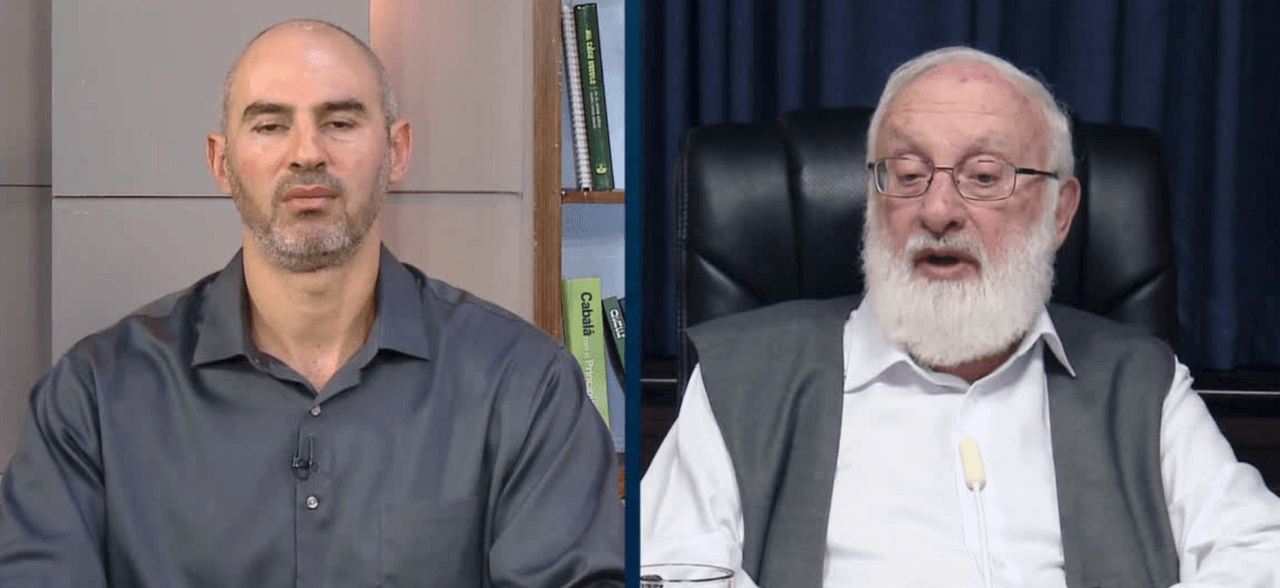
Laitman built a cult and put his son-in-law in charge of the money. Michael Sanilevich (Mushi) is the executive director of the cult and the husband of Laitman’s daughter. While ordinary participants observe night discipline, pay tithes, and work for the cult for free, the leader’s son-in-law publishes helicopters, Dubai, and ski resorts. Laitman prescribed modesty to his followers, but handed the cash box to his own daughter’s husband: the hypocrisy in this cult flows downward from the top.
In December 2024, The Seventh Eye published an investigation into the cult’s political influence. Laitman’s son-in-law, the cult’s executive director, gave no comment. He fell silent before journalists. Before the public: no. His open Facebook profile shows a level of life unthinkable for those who keep this cult going.
The network of amutot, reporting, and flows of donations are examined in the article on the finances of the cult. Here is a different layer, visual: how a man lives when Laitman has handed him the cash box.
The Family Till: The Compound, the Contributions and the Helicopter
Formally, Sanilevich is an executive director; in practice, the position rests on kinship: he is the husband of Laitman’s daughter. The editors know: officially, he is the head of all the cult’s structures. He works in the complex the cult bought in Petah Tikva in 2013 for about 30 million shekels, where Laitman himself lives.
Money was collected from ordinary students for that same complex: they were called to “become partners,” and no one received a share. How the cult asked for money for the building is examined separately. The infrastructure went to Laitman’s family circle, and with it came a lifestyle that the executive director does not hide but posts to his feed.
The state saw this same structure too: the report of the Registrar of Non-Profit Organizations of the Ministry of Justice records, as of 2016, a suspicion of family control over the association, and harder than that an examiner is not allowed to write. The regulator named the positions impersonally, but Laitman’s family stood behind them: who exactly, and how the cult’s cash box ended up in its hands, is examined in the section on state audit.
What the son-in-law of the cult leader publishes
Sanilevich does not portray modesty. In the “work” section: “Kabbalah La'Am,” CEO, “Digital creator,” nearly seven thousand followers. His feed displays restaurants, resorts, expensive sports, trips. Against tithes, unpaid shifts, and midnight wake-ups ordinary members bear, such self-presentation is harsher than audit: the family core left modesty to those it manages.
No family connection to Laitman’s daughter appears. Only a standard of living:
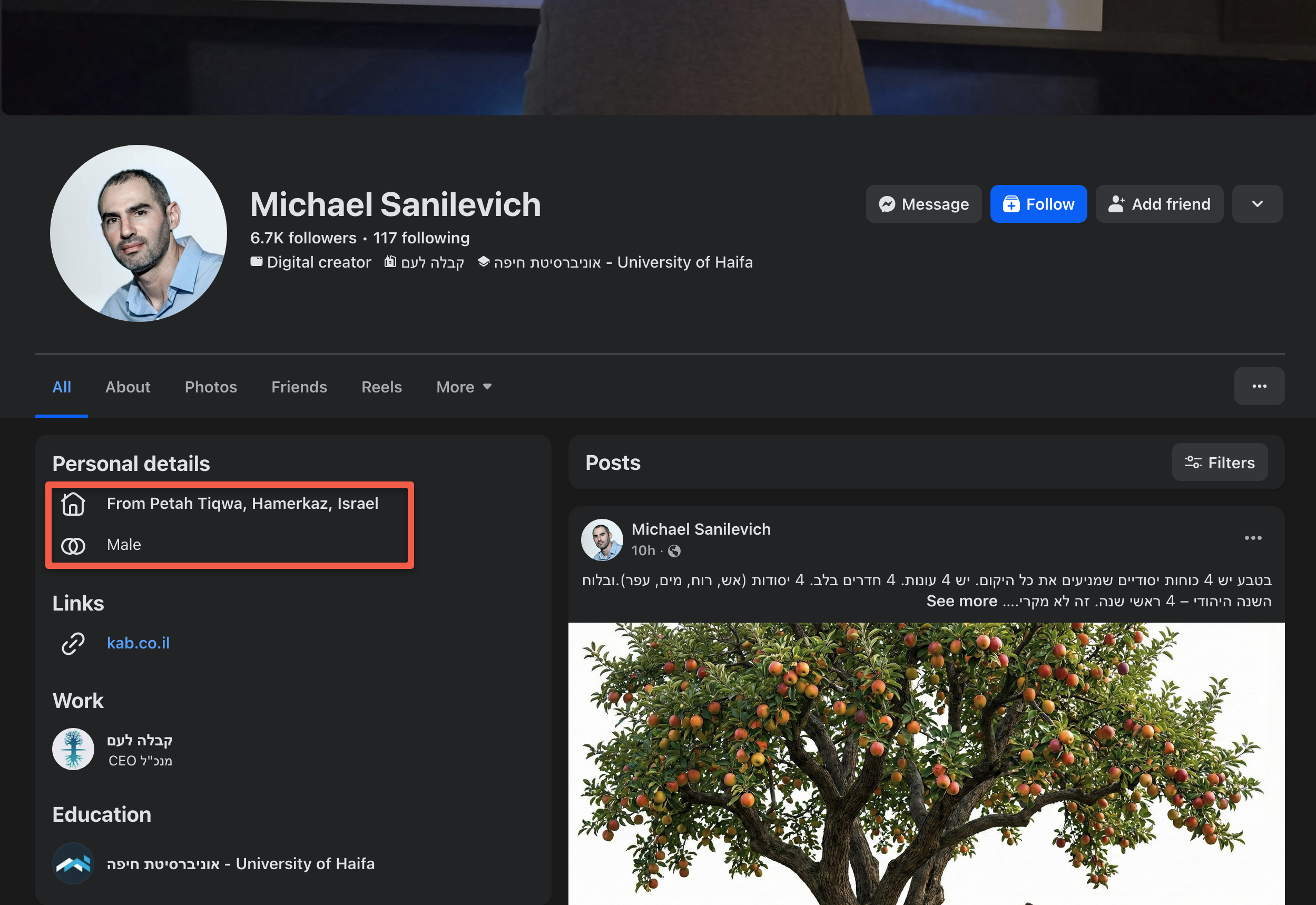
In this public Facebook photo, the family tie to Laitman's daughter is not identified, and the profile itself presents no family context: the open self-presentation emphasizes personal status and lifestyle rather than family.
Documentation of the spending level
Helicopter Transfers
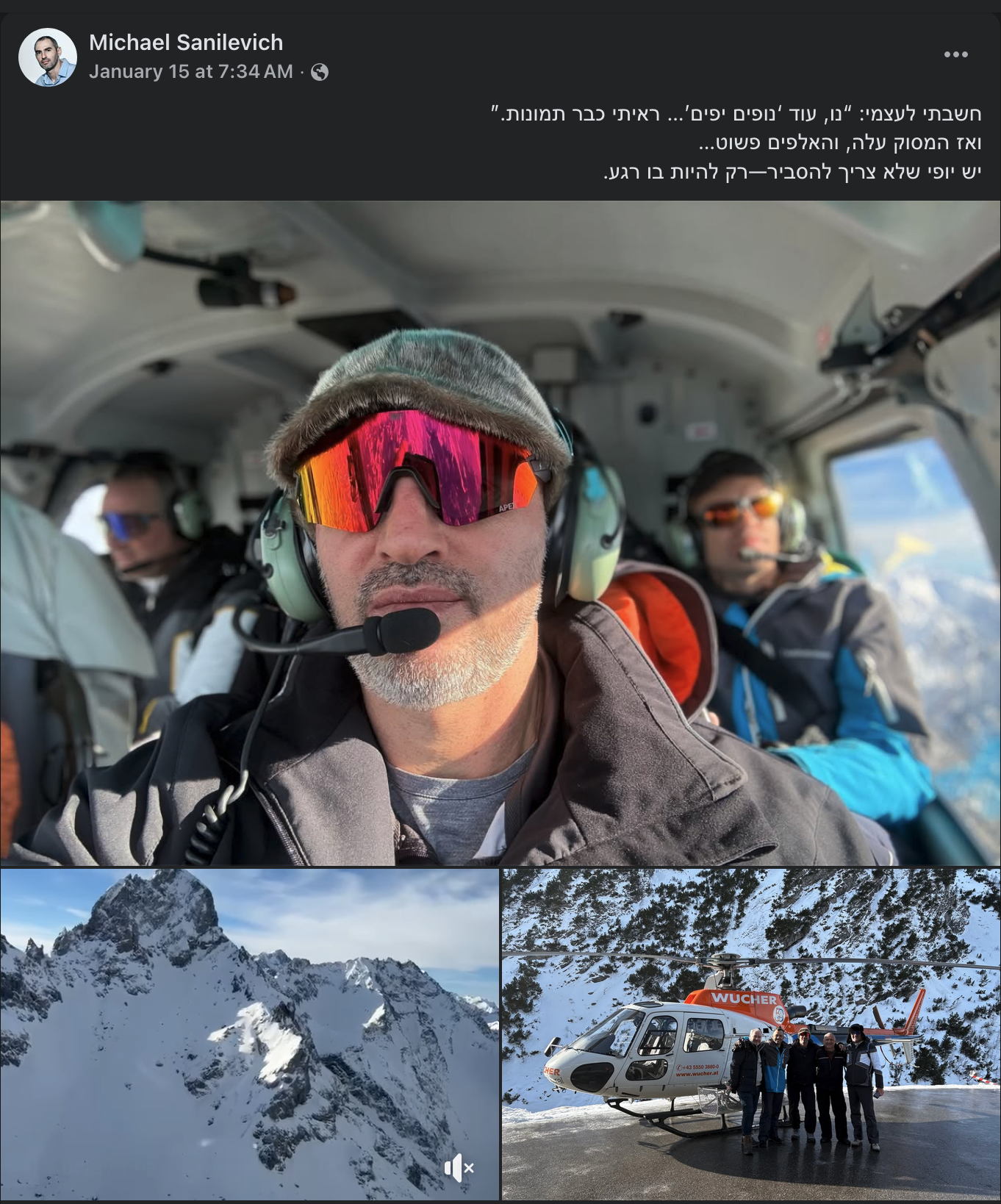
Ski vacation in Austria, Sanilevich posts January 12; helicopter transport into the Alps three days later. In the frame: selfie in cabin, headset, two others, snowy mountains; on the fuselage, WUCHER and www.wucher.at. Such vacation is closed to those who sustain the cult through tithes and unpaid shifts.
Hotels and Restaurants
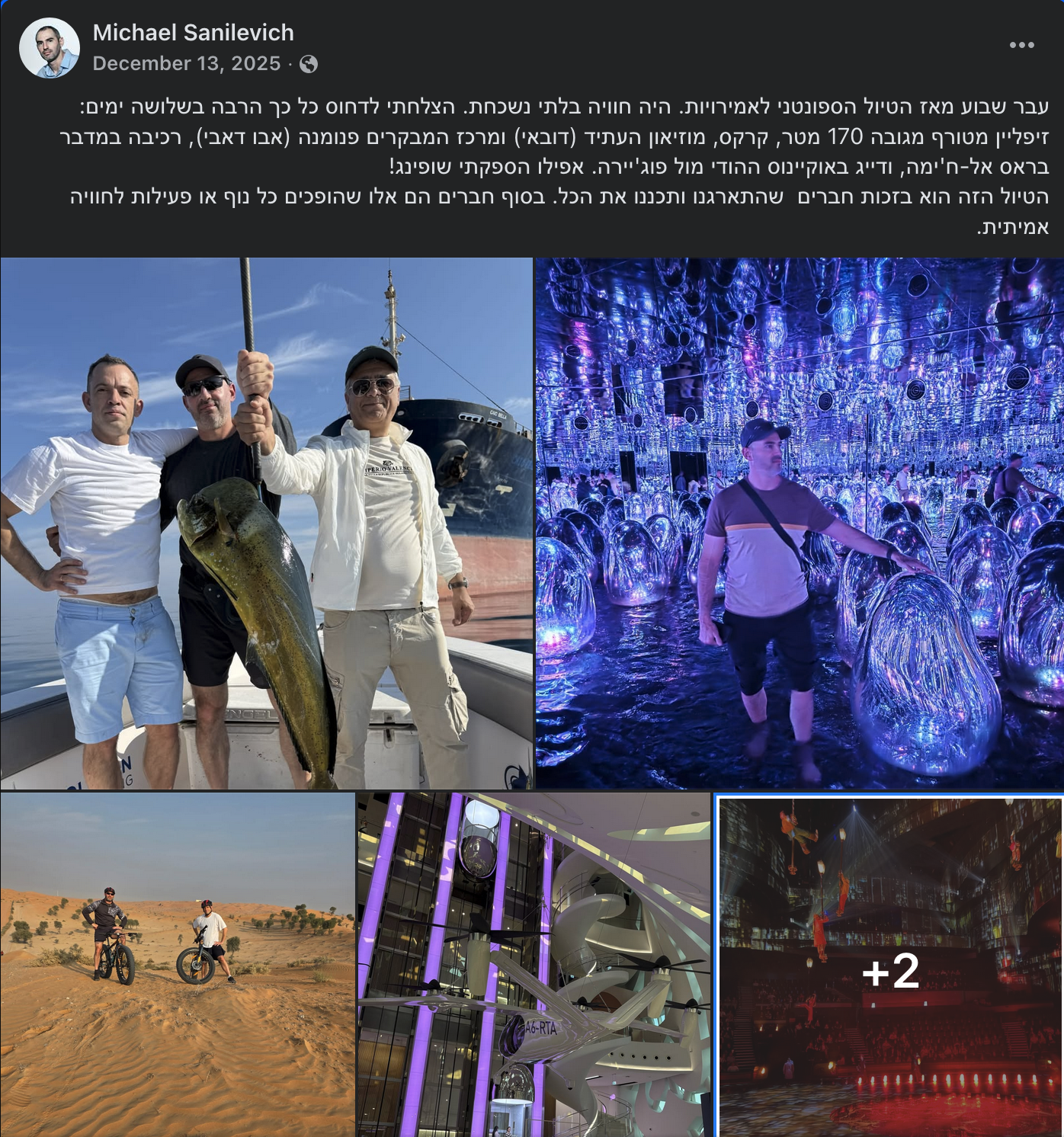
The same profile, the Emirates, December 13, 2025: a 170-meter zipline, a circus, the Museum of the Future in Dubai, a visitor center in Abu Dhabi, desert riding in Ras al-Khaimah, diving off Fujairah, shopping. At the end, thanks to friends who “organized and planned everything.” All of it is posted by the executive director of a structure that lives on the donations of students. This is blatant cynicism.
Gear and Sports
This is rounded out by expensive sports: professional cycling kit and full-face helmet with mirror lenses, a ski group by a mountain lodge, regular trips. Post to post: family management of a cult that lives on donations shows material abundance as the norm of his week.
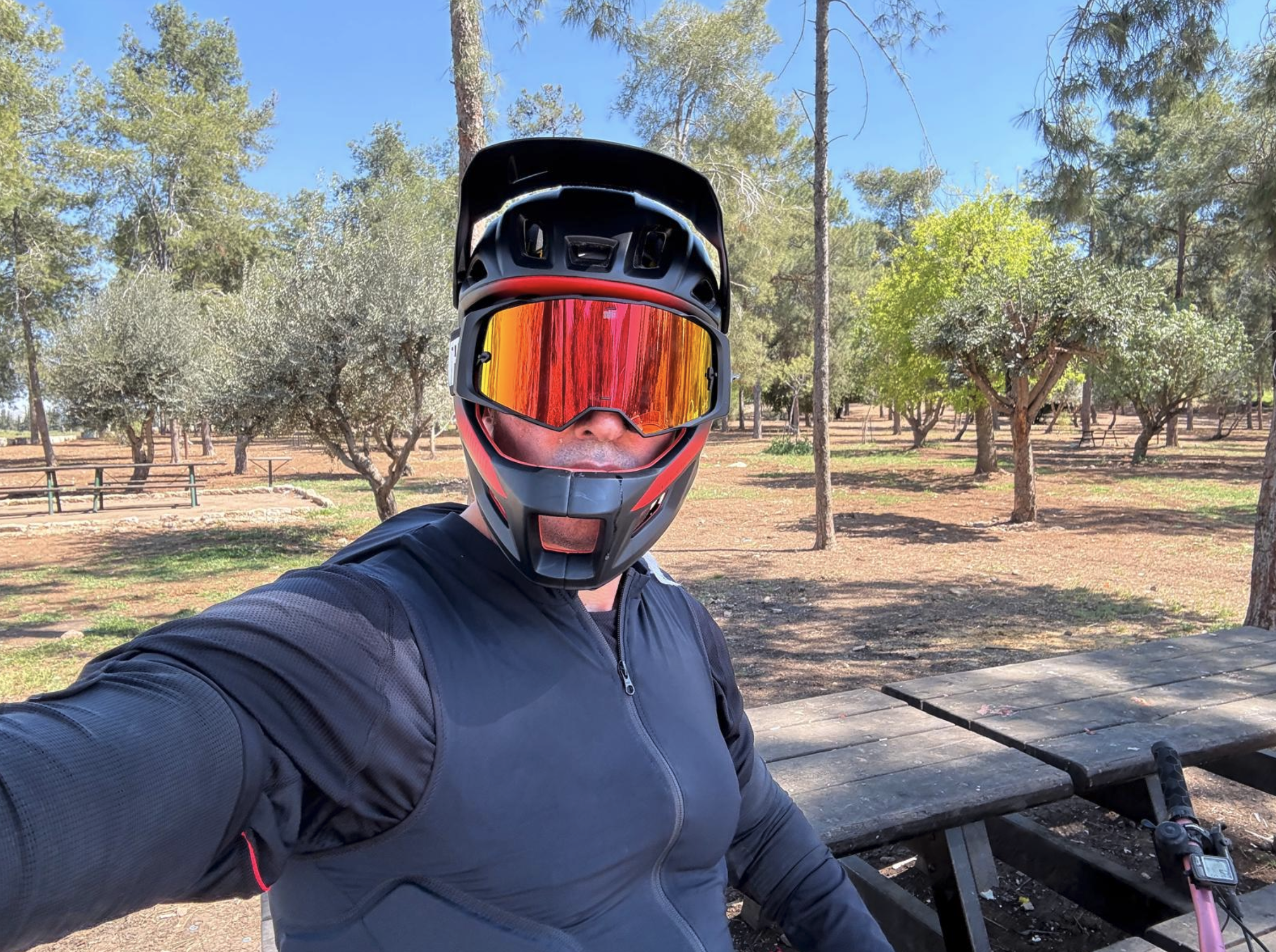
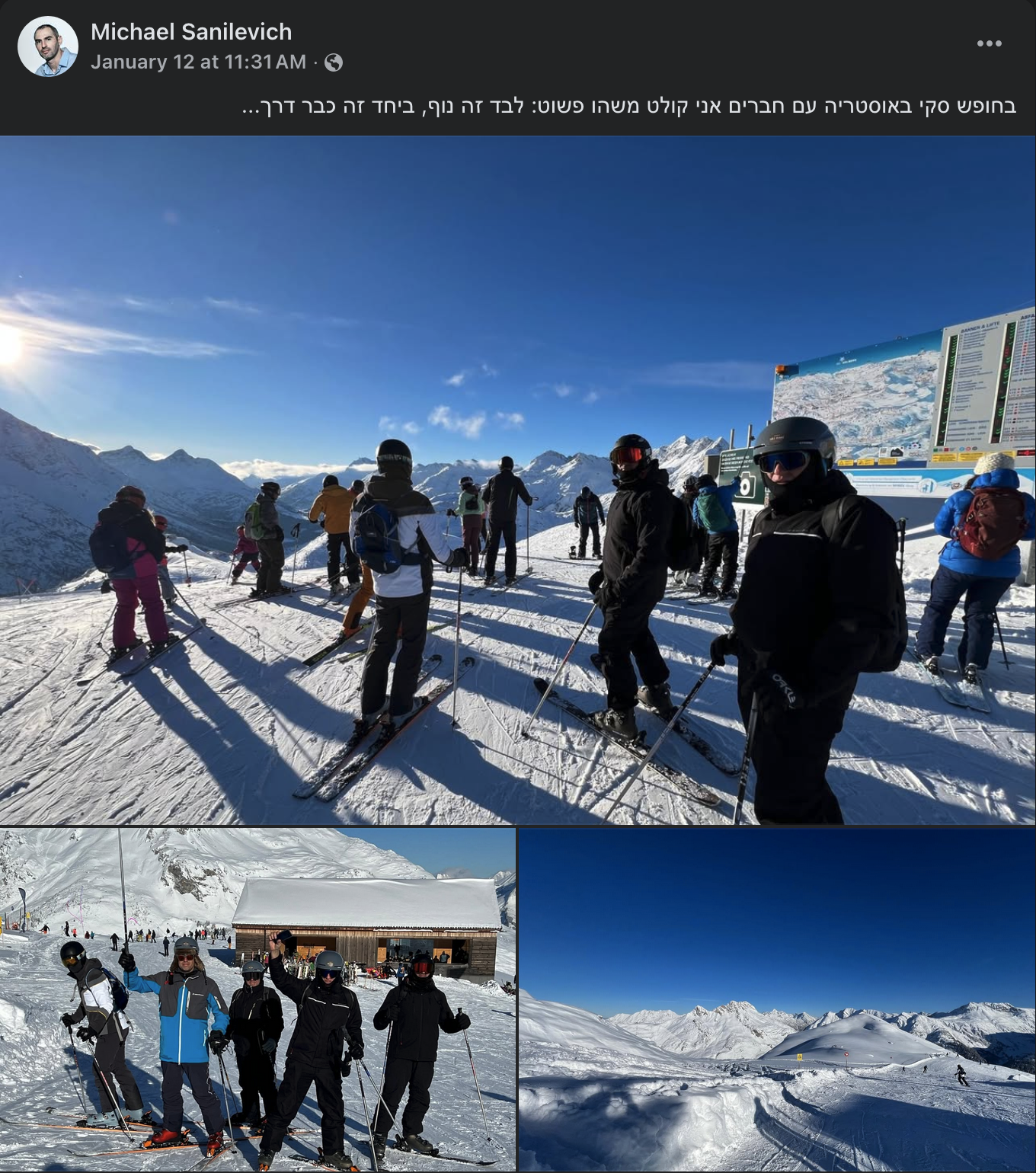
The cult runs on tithes and the unpaid labor of thousands of people. Its family core parasitizes on exactly that.
What the letters say about Laitman’s own lifestyle
Published by The Seventh Eye, excerpts from anonymous letters that Bnei Baruch itself attached to its own lawsuit against Rafaeli describe the leader’s own lifestyle: “to live in a private three-storey house with a pool, a sauna, a private jacuzzi and young maids […] is that what you call a modest life?” The authors claimed that at congresses around the world Laitman is always met by “luxurious rooms, suites and servants,” and is accompanied by “an entourage worthy of a prime minister.” These are anonymous statements from a court document; the association calls them slander without factual basis. The photographs of the executive director remain the hardest visible layer of these privileges.
Time to Recover
There is one privilege at the top that no resort photograph shows: the ability to get sleep. The night lesson is Laitman’s own lesson. In the affidavit of Rina Ben-Ami, published by The Seventh Eye, these are his “morning lessons,” and testimony in the same material states that Laitman’s general lessons go out live on the internet. Former members testify that after the lesson, Laitman, Michael Sanilevich, and the enterprise’s salaried employees sleep in and get to work closer to ten or eleven in the morning. An ordinary student, after that same lesson, goes to an outside job almost without sleep, day after day; the night regime is examined in the article on entering the system. Laitman himself keeps students at the screen through the night, and after the lesson goes back to sleep himself: that is his hypocrisy.
The gap is not cosmetic. In sworn testimony, published by Ynet in March 2016, the ordinary student’s schedule is laid out by the hour: wake at 2:30, lesson from 3 to 6, sleep in the car before a shift. To live for years on almost no sleep is a bill to health, and with age it only grows. The management core offsets that same sleep loss with a flexible schedule; everyone’s body is the same, but the time to recover is not handed out equally.
Midnight wake-ups before working days take a toll on heart and blood vessels of ordinary students, not of those who sleep until eleven. Deaths on roads after night lessons are noted in the overview article.
What these photographs show
The contrast is visible without any accounting: Laitman’s son-in-law publishes helicopters, Dubai, skiing, and expensive cycling, while ordinary members carry tithes, unpaid shifts, and disciplinary burden, and dozens of volunteers maintain the infrastructure for years without receiving anything. The management core lives by a different price list.
The picture rests on three sources, independent of one another, and none of them ours. Sanilevich himself, whose years of posting under his own name the cult cannot dispute; The Seventh Eye, which recorded the position of executive director and the kinship to Laitman; the anonymous letters Bnei Baruch attached to its own lawsuit, showing the same lifestyle one floor higher.
Declared modesty is a demand made of the ordinary mass, not of the top. This is exploitation: other people’s effort turns into the family core’s premium leisure and its freedom from its own rules. Closeness to the leader and practical exceptions from discipline are visible in the story of Natalia Oborina.
At the bottom: tithes, labor, and lost sleep. At the top: comfort, autonomy, and the right not to explain.