Eli Vinokur: Gordon College vice president, cult veteran, and a case of pressure on a witness
Where you are in the dossier: Harm and testimonies Mixed evidence
When Bnei Baruch was preparing the victim for court, it needed a translator, and the one it picked was not picked at random. According to Alesya’s signed testimony, given at a lawyer’s office, the translator was Eli Vinokur: “because he knows the whole story and if need be will be able to translate in court the way BB needs.” The same man is vice president of Gordon Academic College and a veteran of the Kabbalah La’am cult; on July 25, 2025, LAHAV 433 questioned him on suspicion of obstruction of justice and inducing A. to give false testimony, Ynet reported. According to The Seventh Eye's account of Binyamin Rafaeli’s affidavit, Vinokur was present at the meeting where A. was prepared and translated explanations for her into Russian.
Academic standing and the Vinokur family
Ynet identifies Vinokur as Gordon College’s vice president. The Seventh Eye calls him a veteran of Kabbalah La’am. These are not two lines of biography but two sides of one structure: the position supplies public trust, the standing in the cult supplies the task.
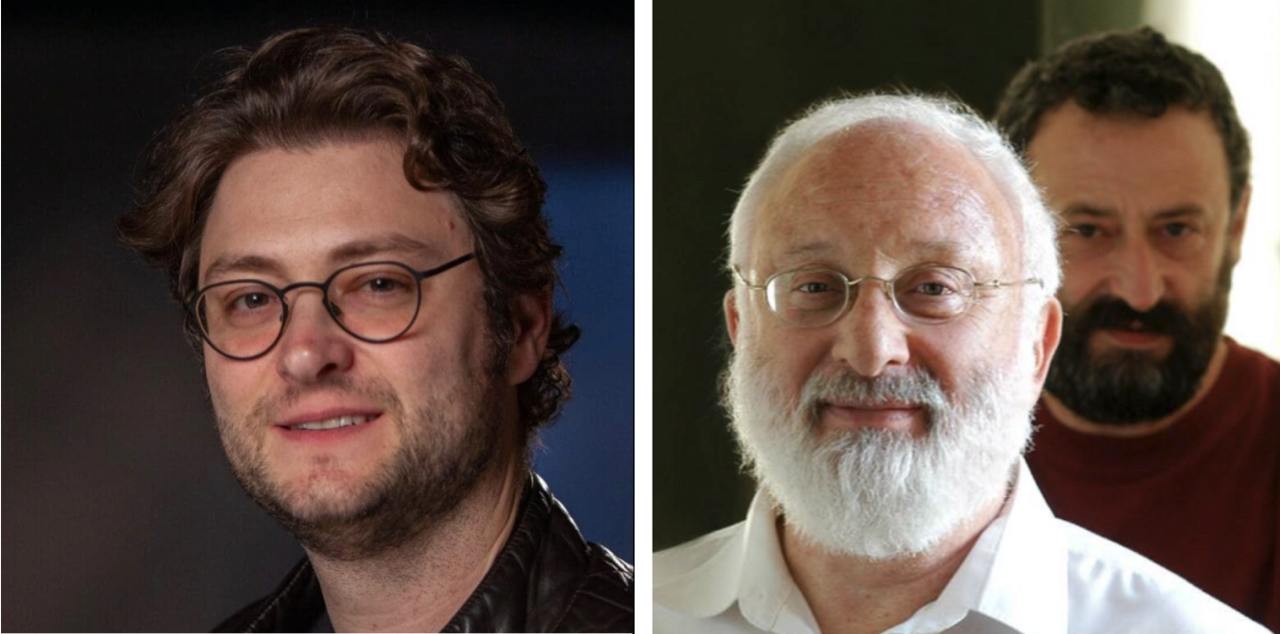
Semyon Vinokur is Eli Vinokur’s father; in the photograph above he stands behind Laitman. That is how the name Vinokur turns up twice in this story: the father behind the cult leader’s back in the photograph, the son a Kabbalah La’am veteran placed against the victim’s language. The family has kept close to Laitman for years.
Haaretz reports A.'s testimony, in which she named Vinokur among those who instructed her to give false testimony. The academic title and the years inside Kabbalah La’am are not two different men. The college vice president was in the room where the victim was being prepared for her court appearance.
Translation as a pressure point
The procedural node is covered in a separate article on LAHAV 433: the roles of both suspects and the course of the questioning. What matters here is something else: the language through which A. heard what was happening was controlled by a cult veteran. According to her testimony to police in Haaretz, she was instructed by Milwidsky, Vinokur, and Gelman.
Under the police version Israel Hayom relays, Vinokur and Gelman took part in bringing A. in and inserting the required version of events. Under that version, Vinokur and Gelman determined the content of her testimony.
The choice of translator was not a technical one. They wanted Vinokur specifically, by the same testimony, “because he has a very ready tongue and will be able to correct me if need be in BB’s favor.” At the 2018 rehearsal he did the translating. A year later, right before the hearing itself, a five-to-six-hour training session ran in lawyer Tzvi Gelman’s office, and again he translated. Then on the day of the hearing the translator was abruptly swapped for a woman. This does not look like a one-off: a man with an academic title was placed against the victim’s language twice, at both stages of the preparation. That is exactly where the pressure is applied: between the woman and the court stood a man of the cult, and how her words would sound depended on him. In the account of Rafaeli’s affidavit, Vinokur translated explanations into Russian.
The academic position works here as a shield. That is an editorial conclusion, and the chain beneath it is short: the title of college vice president supplies public trust, and the account of Rafaeli’s affidavit seats that same man at A.'s preparation meeting. Respectability did not get in the way of the practical role. It covered for it. In The Seventh Eye’s court account, that episode is tied to Bnei Baruch’s lawsuit against Rafaeli and to the affidavit in which Vinokur’s role is described as translation and accompaniment of the briefing.
In the preparation room sat a woman whose own story was being rewritten for the hearing. By her account, other people determined the words she would use in court to describe the sexual violence she had experienced and which facts she would conceal; the language through which the proceedings reached her was controlled by a cult veteran. She brought a version written by others to the courtroom; her own memory had no place in her testimony. The victim was left deprived of what remains after violence: the right to speak about it in her own words.
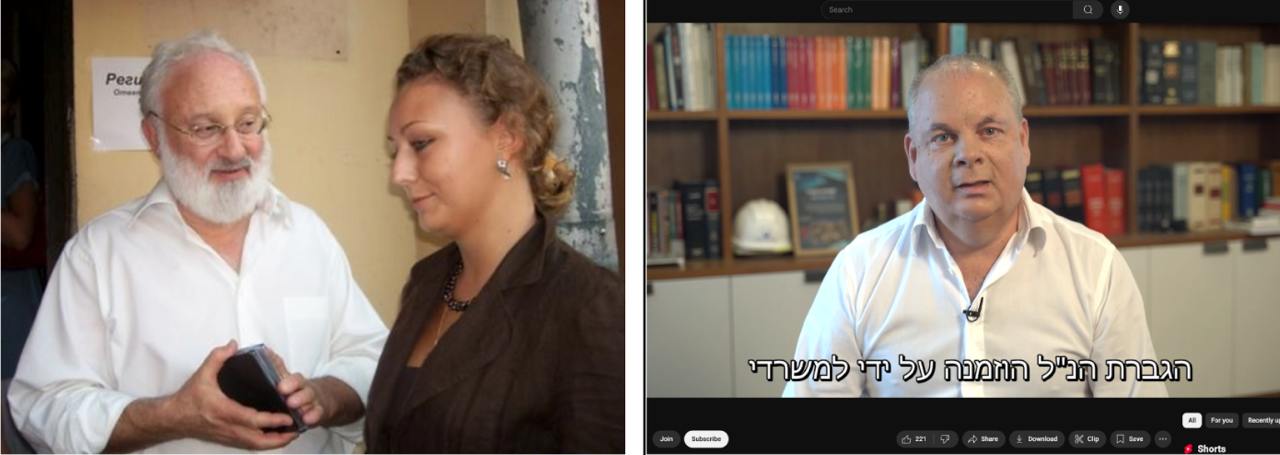
In the photo, Laitman is persuading Alesya to come to the congress in Israel to continue getting acquainted.
A public episode without retelling the whole case
In Alesya’s public appearance on Channel 12, she described her instructions: what to say in court, which facts to conceal, and the emotional tone required. According to her account, she was required to bring to court a version other people had written.
Vinokur did not respond to inquiries from The Seventh Eye and Shakuf after the questioning.
Gordon College and the external sign of trust
Walla reported that Gordon College management learned from the press that its vice president was questioned on suspicion of interfering with justice and inducing A. to lie in her testimony.
Ynet lists his positions and academic path: vice president for academic development, head of the Department of Social-Community Education at Gordon College, graduate of Tel Aviv University’s Ofakim program and the Mandel program, and a researcher with postdoctoral work at Columbia University and Oxford.
Three outlets, independent of one another, describe a single figure, and the entire preparation, in which a cult veteran controlled the victim’s language, served one person: Michael Laitman. In 2019, A. denied in court having a sexual relationship with him, Haaretz reports; LAHAV 433 suspects Vinokur, Gelman, and Milwidsky of pressuring her into false testimony in Laitman’s favor (this node is analyzed separately). No significant move inside Bnei Baruch goes around Laitman, there is no independent center of decision beside him, and submission to his instructions rests on the belief that the Creator speaks through him. Laitman is dangerous exactly because of this: in his system, even the language of a woman who, according to Haaretz, said he subjected her to sexual assault, is handed to a man who, per her signed testimony, was supposed to “translate in court the way BB needs.”